

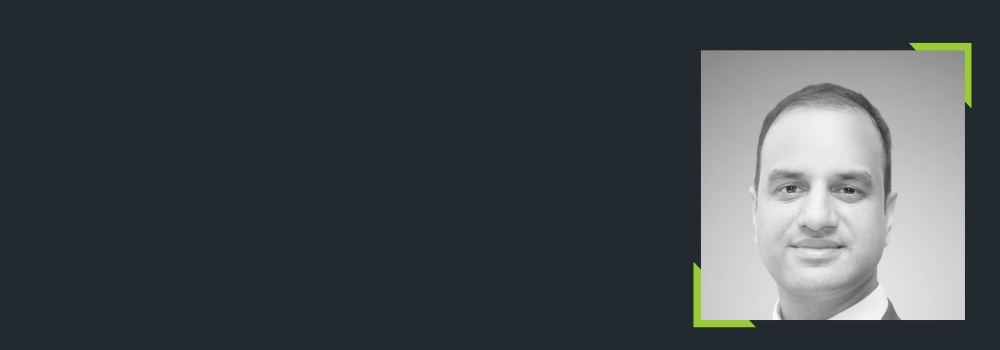
Vikas Katoch
Founder & CEO, Sidra Healthcare
Healthcare is everywhere. Access to it is not.
In most cities, you can order food, transport, and almost anything else within minutes. Yet when it comes to primary care, the system still relies on queues, availability, and fragmented follow-up. The experience is reactive, often expensive, and rarely built around the patient’s daily reality.
In this episode of The Matrix Green Pill Podcast, Hilmarie Hutchison speaks with Vikas Katoch, Founder and CEO of Sidra Healthcare, about what it takes to rebuild that system from the ground up, not through disruption or technology-first thinking, but through something less glamorous and far more difficult: disciplined execution.
After nearly two decades in healthcare across multiple markets, Vikas concluded that healthcare should not be limited to clinics and hospitals. It should move to the patient. Accessible. Affordable. Personalized.
→ Listen to the full podcast conversation
The Green Pill Moment
Vikas does not point to a single defining breakthrough. His Green Pill moment is quieter and more foundational.
Raised by a single mother after losing his father before he was born, he grew up watching resilience in its most practical form. There were no shortcuts. Just consistency, discipline, and the expectation that effort compounds over time.
That experience shaped a core belief he carries into business:
There is no substitute for hard work.
It explains his bias toward execution over theory, and why he places so much weight on getting the fundamentals right before scaling anything further.
Vikas often frames it in simple terms. Commit to something for 1,000 days. Not weeks. Not months. Show up every day, do the work, and let consistency compound. In his experience, very few people fail when they sustain that level of discipline. Most stop long before the outcome has time to materialize.
The Real Tension Beneath the System
This conversation surfaces a tension that sits at the center of modern healthcare.
The industry is obsessed with innovation. What it often lacks is reliability.
Telehealth, AI, robotics, and data-driven systems are reshaping the sector. But Vikas is clear on one point. Technology is no longer optional. It is infrastructure. And infrastructure only works if the foundation beneath it is stable.
Innovation layered on weak operations does not fix the system. It accelerates its failure.
That is why Sidra was built around three priorities: accessibility, affordability, and personalized care.
Accessibility means bringing care into patients’ homes, especially for those who struggle with mobility or long wait times.
Affordability shifts the focus toward preventive care, reducing the need for expensive interventions later.
Personalization recognizes that no two patients follow the same path, and that care should adapt accordingly.
From Patient-Centric to System-Centric Thinking
Most healthcare businesses describe themselves as patient-centric.
Few build systems that prove it.
At Sidra, that principle shows up in practical decisions. Patients who complete lab tests are offered follow-up consultations with doctors to interpret results. Refund policies apply when service delivery falls short, even when it affects revenue. Customer feedback is treated as a primary source of truth, not an afterthought.
These are not brand statements. They are structural choices.
They also introduce friction. Operational discipline, by definition, requires consistency. Consistency requires process. The process requires people who are aligned with it.
Which brings the conversation back to leadership.
The Shift from Speed to Structure
Vikas draws a clear distinction between early-stage and growth-stage leadership.
At the start, progress is driven by vision and speed. Founders move quickly, test ideas, and rely heavily on individual effort.
That model does not scale.
As the business grows, the center of gravity shifts. Vision must translate into strategy. People must operate within systems. Teams must evolve into a culture.
The progression is deliberate:
- from vision to strategy
- from people to process
- from execution to consistency
The goal remains constant. The method changes.
If the plan fails, change the plan. Not the goal.
It is a simple principle that is rarely applied consistently.
Technology as a Baseline, Not a Differentiator
The role of technology in healthcare is expanding rapidly across the region.
Remote consultations, centralized medical records, robotic-assisted procedures, and data-led decision-making are no longer emerging concepts. They are becoming standard.
But technology alone does not improve outcomes. Its value depends on how well it integrates into the broader system of care. A seamless booking process, timely follow-ups, accurate data sharing, and clear communication often have more impact than the technology itself.
The differentiator is not access to tools. It is how those tools are used to support real patient journeys.
What This Changes for Leaders
Operational excellence is not a secondary priority. It is the foundation on which everything else depends.
Innovation without structure introduces risk.
Structure without empathy limits impact.
The balance is not theoretical. It is built through daily decisions.
Hiring the right people matters.
Clear processes matter more.
In healthcare, trust is not created through messaging. It is built through consistent delivery over time. And in leadership, discipline outperforms intensity. There is no shortcut around that.
The Question to Sit With
Are you building for speed or for consistency?
Not as a philosophical question.
As a structural one.
Listen for the Full Context
→ Listen to the full podcast conversation
This executive perspective captures the operating philosophy behind Sidra Healthcare. The full episode explores Vikas’s journey from a small town in India to leading a healthcare business in the UAE, the decisions that shaped his approach, and the practical realities of building a patient-first model in a complex system.
For founders and leaders, the takeaway is not abstract.
Healthcare does not improve because of ideas.
It improves when those ideas are executed consistently at scale.